To ensure the reliability of my phone and computer data, ever since I started using the Apple ecosystem, I registered a Turkey-region Apple ID to subscribe to iCloud, and then added my primary China-region Apple ID as a family member so that I could share the 200 GB of iCloud storage included with the subscription for backing up important data, photos, and other content.
The China-region iCloud 200 GB subscription costs 20 yuan per month. Initially, the 200 GB plan in Turkey cost only 19.99 Turkish lira, which converted to approximately four yuan per month—an extremely good value.
Regarding the exchange rate between the Turkish lira and the Chinese yuan, considering that most people do not have foreign-currency cards and instead use gift cards purchased from platforms such as Xianyu to top up their accounts, based on the lowest current price on Xianyu, 100 Turkish lira is equivalent to 20 yuan. Other channels may offer even lower prices.
However, in June 2023, Apple sent an email announcing the first price increase for iCloud subscriptions in Turkey. The price rose from 19.99 lira to 39.99 lira, doubling directly and bringing the converted price to eight yuan per month.
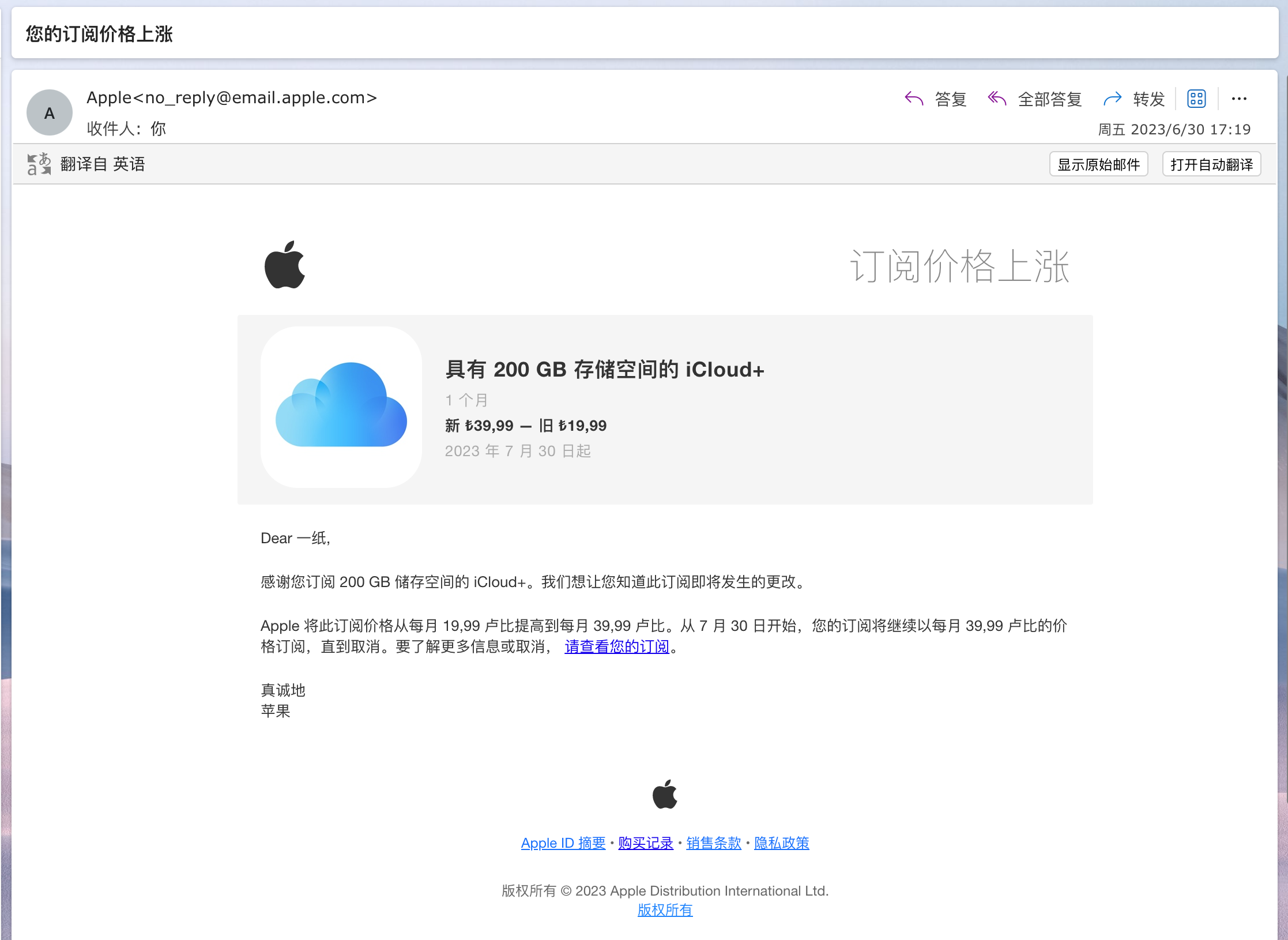
Although the subscription price had doubled, it still had some advantage over the 20 yuan-per-month China-region iCloud plan, so I gritted my teeth and continued the subscription.
But recently, I once again received an email from Apple announcing another price increase for iCloud in Turkey. Just like last time, the price doubled again, rising from 39.99 lira to 79.99 lira, which converts to approximately 16 yuan.
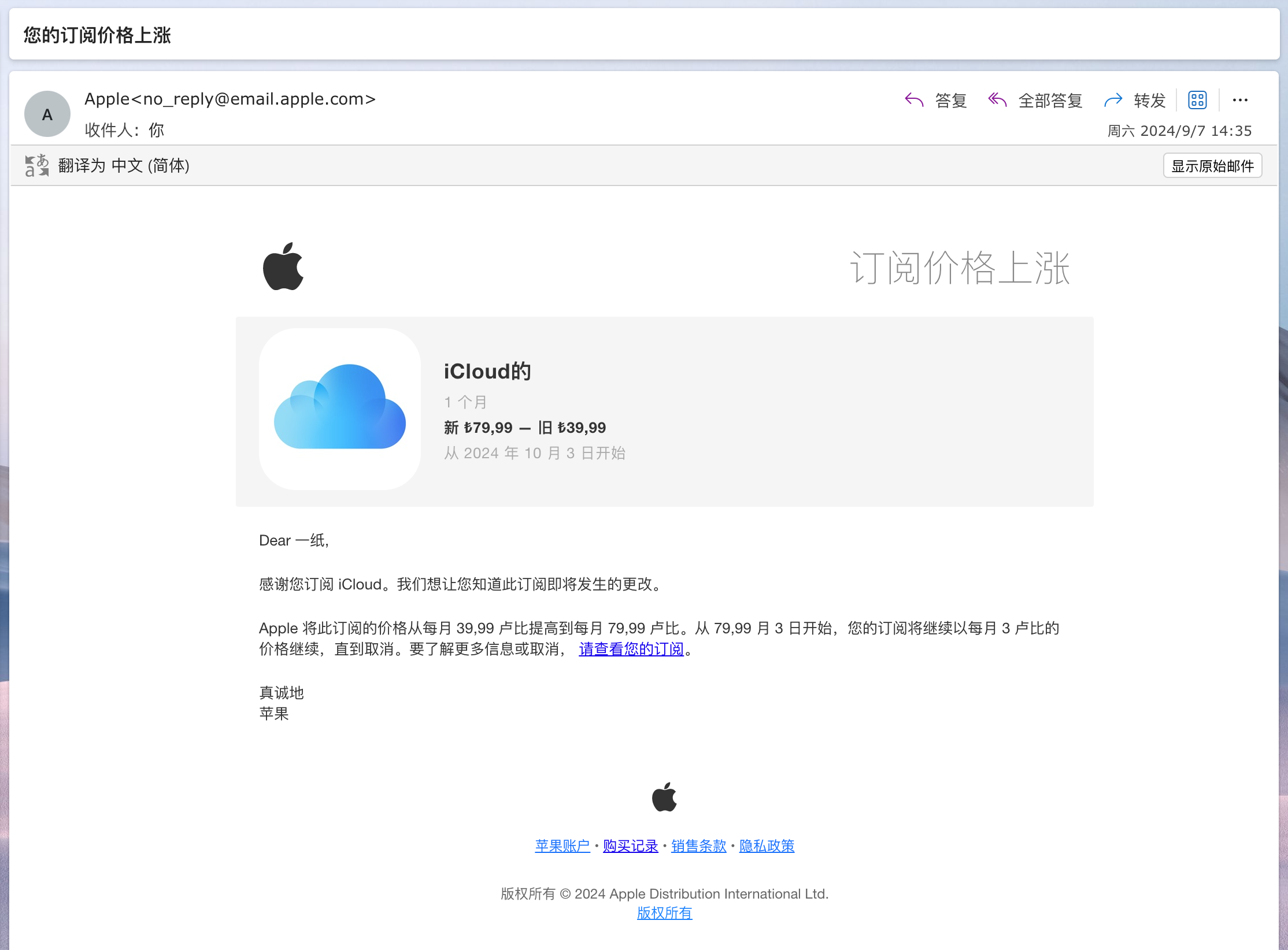
However, since the price of Turkish gift cards on Xianyu also fluctuates, the exchange rate mentioned above represents the lowest possible price. With some fluctuations included, the price of an iCloud subscription in Turkey is now almost the same as that in China.
Since that is the case, I feel there is no longer much point in using a Turkey-region iCloud family-sharing subscription. Going forward, I will probably consider getting a NAS to replace iCloud and continue storing and backing up some important data.