It has been raining heavily in Guangzhou for several days in a row, and even I have started wearing flip-flops to work. It is a rather strange outfit: when it rains, the temperature drops, so a short-sleeved shirt alone is too thin. I can only put on another jacket or a sun-protective jacket, while wearing flip-flops on my feet.
My luck was fairly good today. It was pouring before I left home, but it eased up a little after I went downstairs. I went to the electric scooter charging station, and by the time I set off, the rain had stopped. When I arrived at the company, it started pouring again.
March is coming to an end, and Copilot’s advanced request quota is about to refresh. I have really been trying to conserve it these last few days, carefully checking every prompt before sending it, afraid that a mistaken instruction would waste the quota.
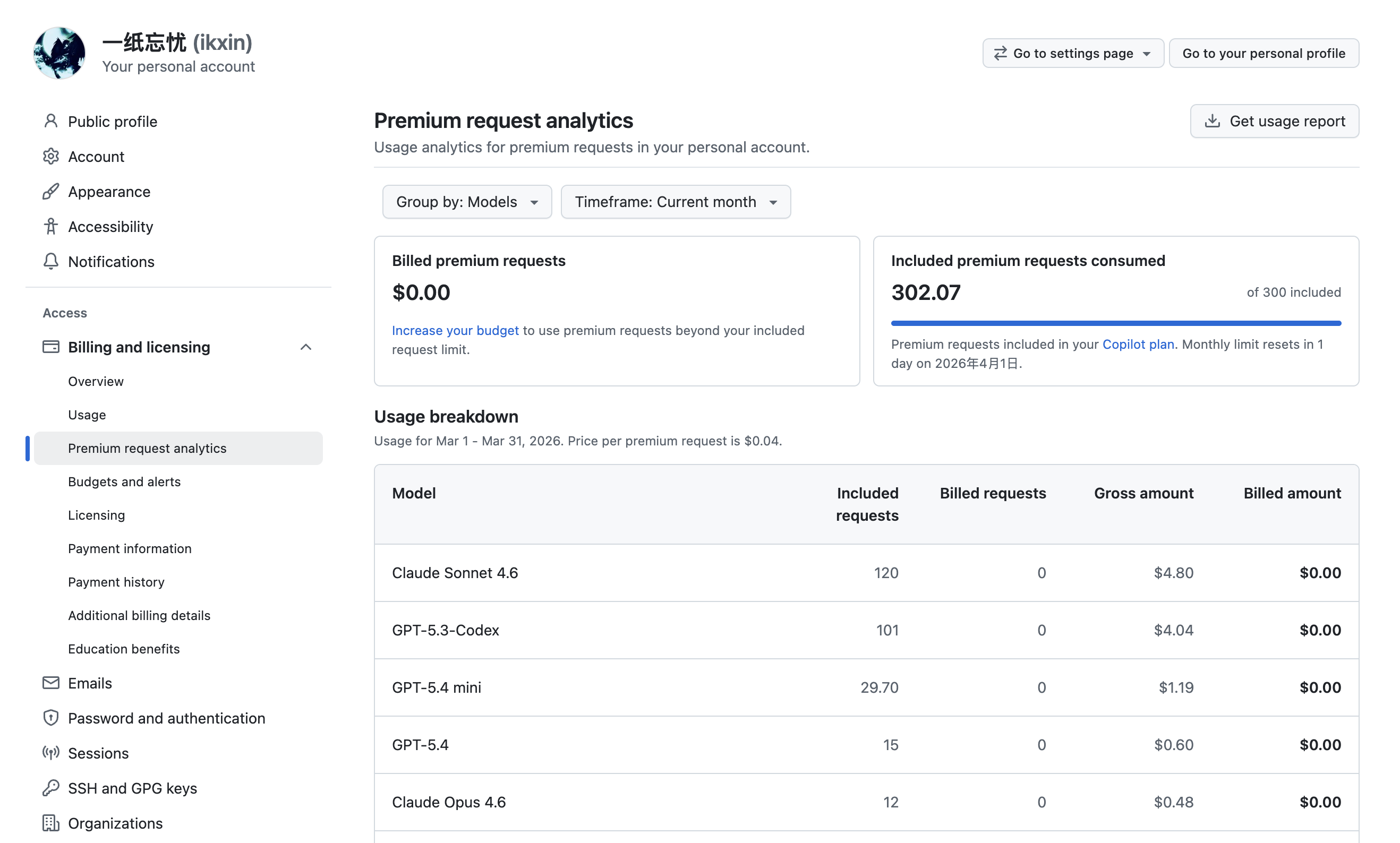
But the advanced request quota is still being used up very quickly. There was no other way, so I had to bring in domestic models as substitutes. But for some reason, although the OpenCode Go model has not yet reached its limit, its requests are unusually slow and even fail.
Fortunately, I came across a generous user on L Station who shared a key for Alibaba Cloud Bailian’s Coding Plan. After trying it several times, I found that its response speed was much faster than before, and its output quality was also very stable.
These past two days, I have mainly been working on that App project. The original React Native architecture had already become extremely chaotic, with many files placed randomly and no standards in place, so I decided to use the Expo framework to refactor it.
I initially used the GLM-5 model, and it actually managed to complete the refactoring Plan in one go. Later, I even tried using Sonnet 4.6 to run through the refactoring plan, but it still failed to finish. This was the first time I had seen Claude lose to a domestic model.
The same goes for the Translator project. Using Qwen 3.5 for translation, I could run 10 threads at once without hitting the limit, and the translation quality was not even inferior to GPT-5.4 mini, although it was slightly slower.
No wonder the Coding Plans from Alibaba Cloud Bailian and Zhipu both require users to compete for purchases. Just as I said before, the impossible trinity among LLMs is: useful, cheap, and not requiring users to compete for access. Alibaba Cloud and Zhipu each only have two of the three.
The mainland stock market officially concluded its March trading today. The income investor actually outperformed the Shanghai Composite, CSI 300, and other major indexes this month—not because of any great technical skill, of course, but simply because the broader market fell so much.
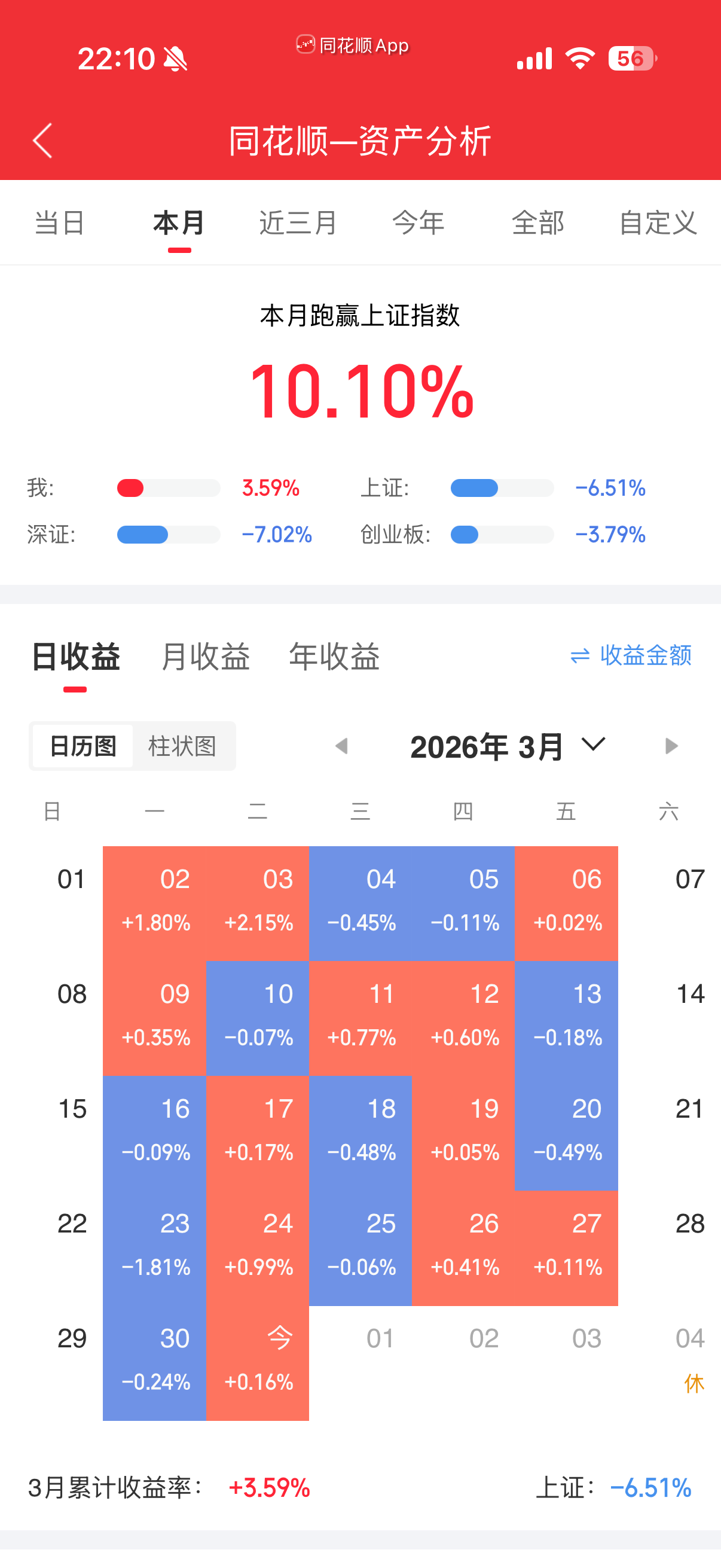
Last night, Midea and SF Holding released their 2025 annual reports. Both their performance and profits grew to some extent. At today’s open, Midea rose six points and SF Holding four points, giving me overall unrealized gains of more than 2,000 yuan. Unfortunately, after opening higher and then declining, they were pulled back down, leaving me with just over 200 yuan in the end.
As of the close of 26Q1, the return was 2.79%, still halfway short of the annual five-point target. The income investor’s strategy is indeed reliable: in the mainland A-share market, preserving capital is the most important thing. Never set your expectations for profits too high.