I signed the employment contract with the new company on the twenty-fifth of last month, and as of today, it has been exactly one month. Before I knew it, so much time has passed since the New Year. There are still two months left until the end of my probationary period, and I hope I can successfully become a permanent employee.
I stopped writing One Day diaries for two days, mainly because I was planning to move the content over to my Blog, but there are still some things that need to be configured in the Blog backend, and I haven’t had time to deal with them recently, so I decided to just continue writing here for now.
These days, I’ve mainly still been trying out various large-model providers. Last night, I couldn’t resist signing up for an OpenCode Go plan again. The first month is half price at just $5, and the main reason is that it also supports Alipay payments.
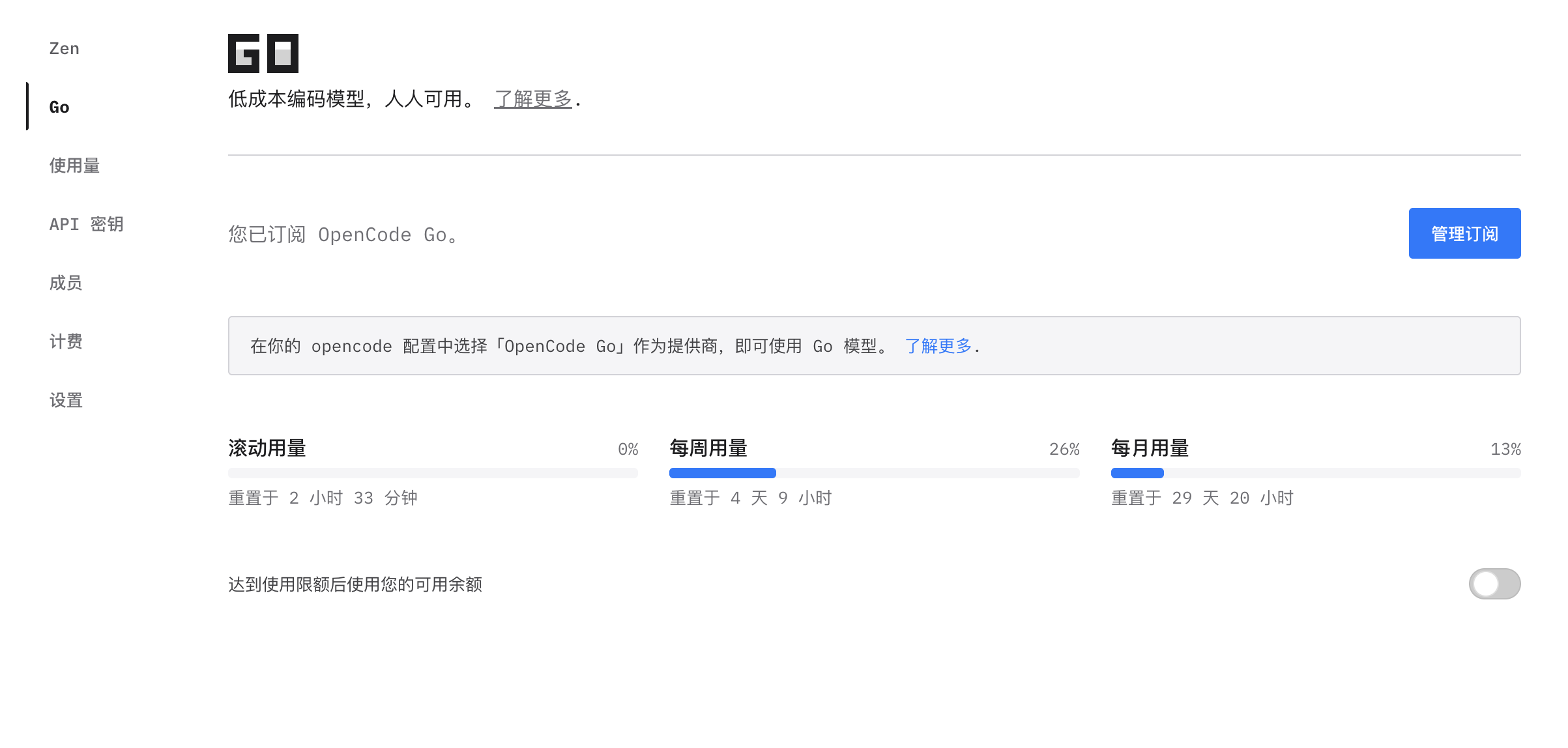
I’ve never managed to sort out Github’s payment method, so I thought I’d see whether OpenCode’s budget plan could do the job. However, OpenCode Go currently only supports open-source large models, such as GLM-5, Kimi K2.5, MiniMax M2.5, and MiniMax M2.7.
Among them, GLM-5 is the most expensive. After multiple rounds of testing, I found that it is also the slowest at generating output. MiniMax is the fastest, but I’ve already been burned by its models once before—failing every year despite taking the exam every year—and the results of this test were the same.
Although MiniMax M2.7 is fast, its output is completely unusable. Just like the Token Plan I bought last week, it failed again. Overall, the only model in OpenCode Go that is somewhat usable is Kimi K2.5.
These models are still too much of a stretch for Vibe Coding, but since I’ve already spent the money, I can’t let it go to waste. So I turned around and used them for Translator instead. Since some models’ APIs are not compatible with OpenAI’s, I also had to make it compatible with Anthropic’s API.
In the end, I still had to rely on Github Copilot. Using the small amount of student benefits I had left, I refactored the Translator project with the GPT-5.3-Codex model and integrated the Anthropic API through the open-source @ai-sdk/anthropic package.
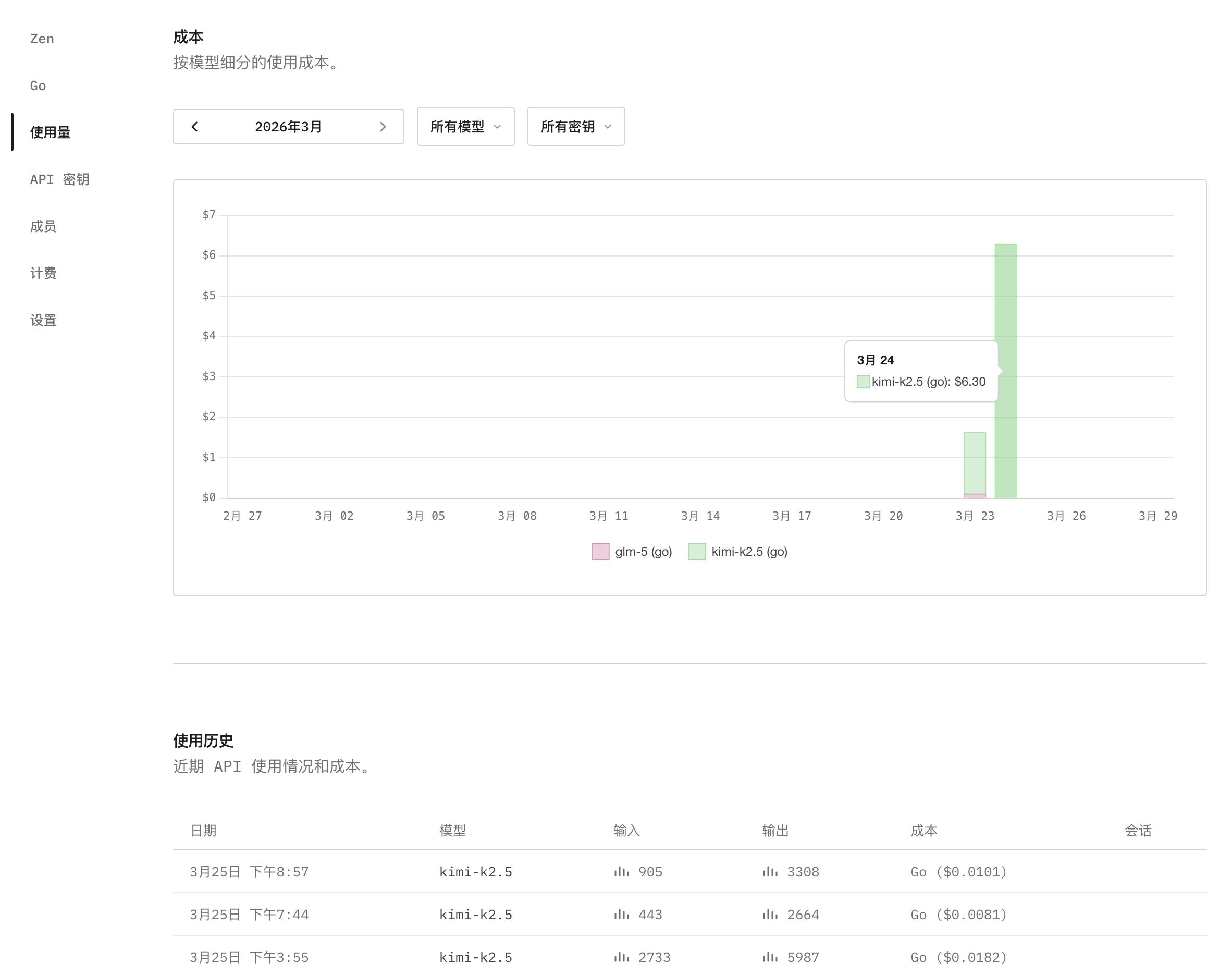
Next, over the course of this month, I’ll try to squeeze as much remaining value as possible out of OpenCode Go, so that this $5 won’t have been wasted.
However, I also discovered another pleasant surprise because of this: it turns out that GPT-5.4 mini is even better suited to Translator. It is not only faster, but also costs only a little more than GPT-4.1 mini. Once this OpenCode Go plan expires, I can switch to GPT-5.4 mini.