Yesterday morning, as soon as I arrived at the office and turned on my computer, the expected result arrived: the Copilot benefits on my GitHub secondary account had also been removed. Worse still, unlike my primary account, the entire secondary account had been banned.
Logging in to GitHub directly showed “user is spammy,” which indirectly caused me to lose access to my DigitalOcean account as well. The $200 student credit I had just claimed last time had not yet been used, and it was gone to waste too.
It looks like I’ll have to find a way to use the official GitHub Copilot from now on, but I still don’t know how to arrange the payment method. What worries me most right now is that my primary account might also be banned because of this. I’ll have to see whether paying to activate it through official channels can help avoid that.
I had been planning for a while to return to Zhongshan and bring my electric scooter over, and I happened to have time this weekend, so I could finally take action. I had two choices: either call Huolala to transport it here, or ride it here myself. I still leaned toward the latter.
The total distance from Zhongshan to Guangzhou is 90 km. The scooter’s range definitely wouldn’t be enough, so I needed to charge it once along the way. According to Xiaomi, one charge provides a range of 120 km, so I could also test how much range this scooter had left.
The first leg was from Zhongshan to Nansha. The plan was to go as far as possible, then find somewhere to charge once the battery ran out, stay nearby for one night, fully charge it, and continue toward Guangzhou the next day. If nothing unexpected happened, one charge would be enough.
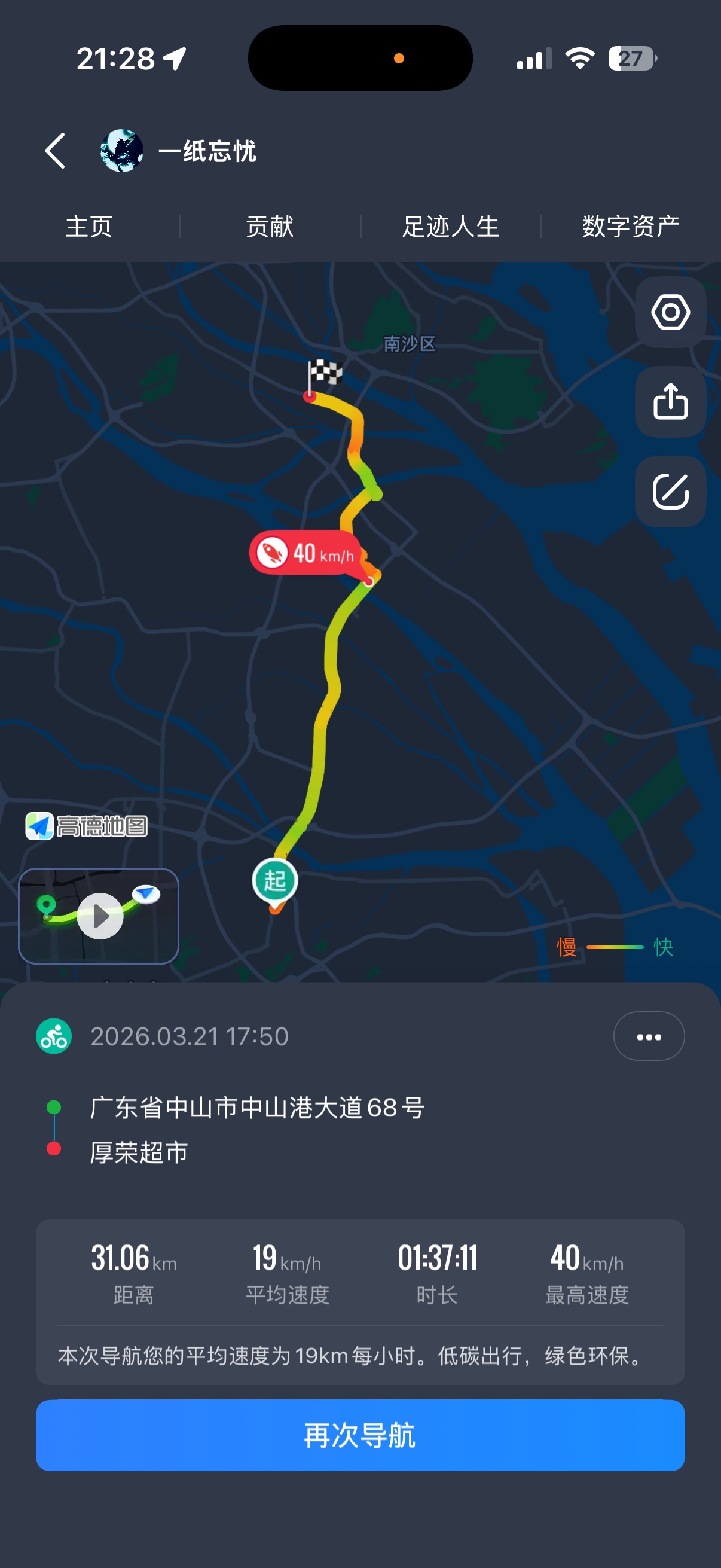
However, I almost ran into trouble along the way. After riding for a while, I realized that the battery seemed to be nearly depleted. I quickly opened the map to see whether there was anywhere nearby to charge, only to discover that I had reached a place that was practically in the middle of nowhere.
I experienced the literal meaning of being far from any village or shop. The nearest market was more than six kilometers away, so I had no choice but to grit my teeth and keep going. In the end, to save power, I got off and pushed the scooter up some of the hills, just so I could make it a little farther.
Fortunately, I managed to find a charging station before it completely broke down. After plugging it in, I found a hotel nearby. Compared with the deserted national highway just before, there were finally some people around here—it felt like discovering human civilization deep in the mountains.
I continued on the next day. I had charged it for nine hours overnight, so it was at 100% when I set off. To test its maximum range, I chose the most economical first gear. Although it was the first gear, it could actually reach 20–25 km/h, which was a fairly suitable speed range.
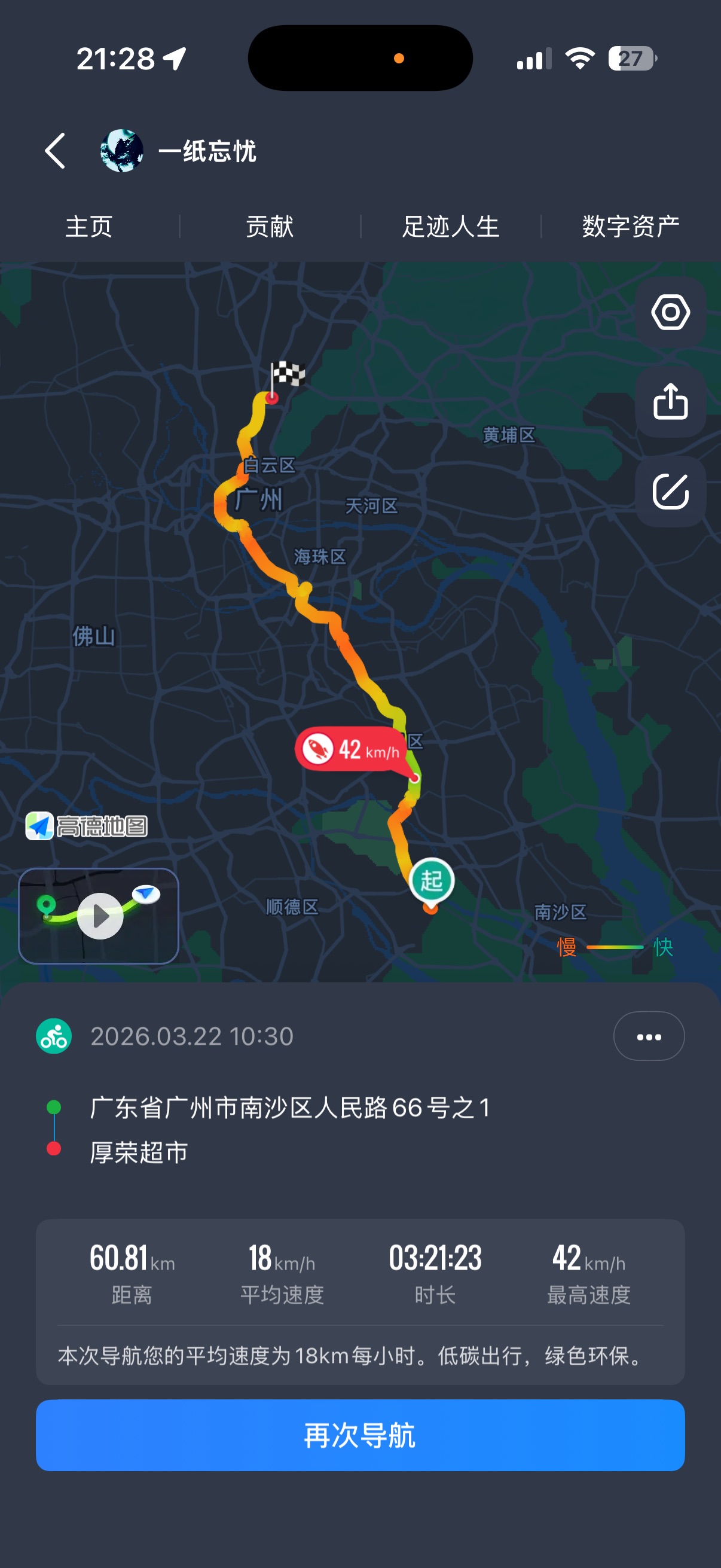
The result of the actual test was unexpected. I never imagined that this electric scooter would have such an impressive range. After traveling a full 60 km, it still had more than 20% battery left. I had always thought that 60 km was probably its maximum range.
And this was under the circumstances that, when I went on a business trip last year, it had been left unused in Zhongshan for a full six months, with its lead-acid battery pack continuously in a depleted state. I had thought that even if its range wasn’t reduced drastically, it would at least have dropped to 80% of its original capacity.
It was truly astonishing. I observed it while on the road, and it seemed that the battery hadn’t dropped at all during the first 30 km. Only afterward did it gradually fall to four bars and then three bars. When I returned to Guangzhou, two bars were still left. Based on the experience from the previous night, it could probably still go another dozen or twenty kilometers.
So the scooter’s theoretical maximum range should be around 70–80 km. And this was with a battery pack that had already been used for more than two years. With a new battery, it might be able to go even farther.
I’ve officially left Zhongshan. In fact, I had already moved my belongings out during last year’s National Day holiday. At the time, I still thought my workplace would move to Zhongshan’s Southern District, but I never expected things to change so suddenly, with the organization facing dissolution by the end of the year. Looking back at my experiences in Zhongshan over the past few years:
- 2019.09 First arrived in Zhongshan, enrolling as a freshman
- 2022.03 Shared a rental with university classmates, received an offer, and began my internship
- 2022.06 Graduated from university, became a permanent employee, and became a Zhongshan taxpayer
- 2023.05 My roommates went their separate ways, I left the rental, and moved into the company dormitory
- 2023.09 Went on a business trip to Liaoning and was away from Zhongshan for four months
- 2025.06 Went on a business trip to Beijing and was away from Zhongshan for six months
- 2025.12 The organization announced its dissolution, I gave up the dormitory, packed my belongings, and came to Guangzhou
- 2026.01 Had two interviews in Zhongshan and a trial work period in Xiaolan
- 2026.02 Interviewed with a state-owned enterprise, successfully passed the first round, but unfortunately there was no follow-up
Today, I finally rode the electric scooter back to Guangzhou as well. It was the last thing I had left in Zhongshan, so I’ve taken everything away with me. Whether I’ll ever return to Zhongshan, honestly, I don’t know either. Perhaps I’ll go back to look around when I have time.
I had genuinely prepared to settle down in Zhongshan. Housing prices there were not high, and my workplace provided a housing fund that could reduce the burden of my mortgage. After living in Zhongshan for six years, I really grew to love this city. It’s just a shame that I ultimately couldn’t stay.