There are many types of VPS virtualization technologies available today, such as OpenVZ, Xen, VMware vSphere, Hyper-V, KVM, and Xen's HVM and PV. In Xen, PV is paravirtualization, while HVM is full virtualization. PV can only be used for systems with a Linux kernel, whereas HVM can virtualize all common operating systems (Linux + Windows).
In theory, HVM is slightly less efficient than PV. In addition, HVM requires CPU virtualization instruction support, while PV has no such requirement. OpenVZ is an operating system-level full virtualization solution similar to Linux-VServer. Currently, there are quite a few VPS providers based on Xen and OpenVZ.
The following explains how to view the virtualization architecture of a VPS.
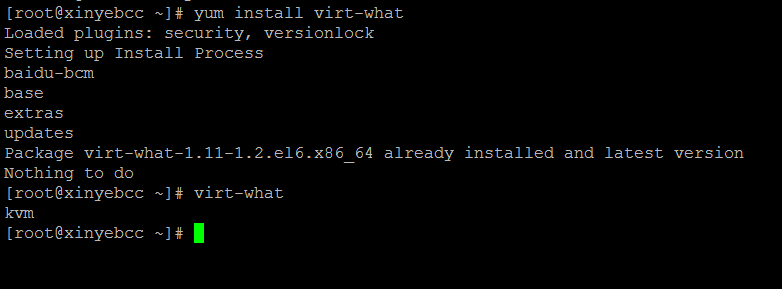
Run the following command over SSH to install virt-what:
CentOS systems
yum install virt-what
Debian/Ubuntu systems
apt-get install virt-what
After the installation is complete, use the following command:
virt-what
This will display the virtualization architecture of the Linux VPS.
The following shows my server's architecture, which is KVM.